
Informal Community Groups and RWAs – India’s Hidden Pitru Paksha Charity Network
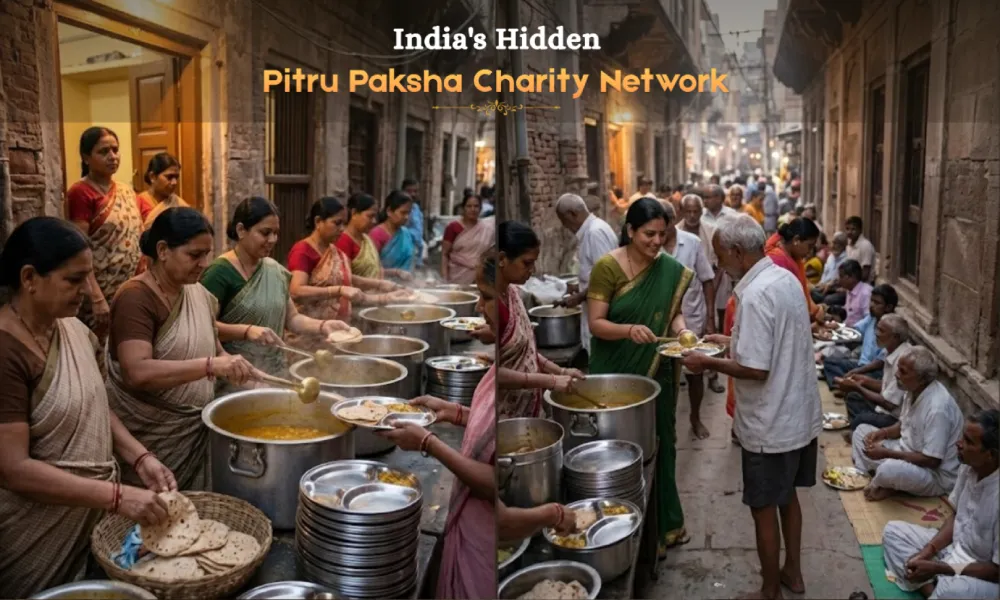
Beneath India’s visible temple trusts and registered NGOs lies a vast, largely undocumented layer of Pitru Paksha charity: informal community groups and Resident Welfare Associations (RWAs). This segment includes neighborhood RWAs, mohalla puja samitis, caste-based charitable committees such as Agarwal Samaj and Marwari Mahila Samiti chapters, WhatsApp-coordinated neighborhood drives, and small family charitable trusts operating with annual corpuses under ₹10 lakh.
The sheer volume here dwarfs every other category by event count, even if not by total spend. Estimates place 50,000 to 80,000 discrete charity drives happening across India within the same 16-day Pitru Paksha window, a number that reflects how deeply embedded this practice is at the hyperlocal level. Each individual drive is modest, typically serving between 15 and 200 beneficiaries, but the cumulative reach is enormous.
Beneficiaries tend to be hyperlocal and personally known to organizers: neighborhood poor families, domestic workers, local sadhus and wandering ascetics, elderly residents without family support nearby, and widows residing in dharamshalas. This is charity built on proximity and relationship rather than institutional outreach.
Geographically, these informal networks are genuinely pan-Indian, spread across all 28 states, with the heaviest concentration in Uttar Pradesh, Bihar, Madhya Pradesh, Rajasthan, Maharashtra, Gujarat, and West Bengal – states with strong community association traditions and dense urban-residential networks.
Financially, individual events range from ₹5,000 to ₹2 lakh, almost entirely in cash with no 80G tax documentation and no formal reporting trail. In aggregate, this segment is estimated to represent ₹300 crore to ₹500 crore in equivalent value annually, combining in-kind contributions and cash — though the true figure is likely understated, since most of this activity remains invisible to formal data-collection systems.
For researchers and policymakers, this informal layer represents both the resilience and the measurement challenge of India’s faith-based charity landscape.
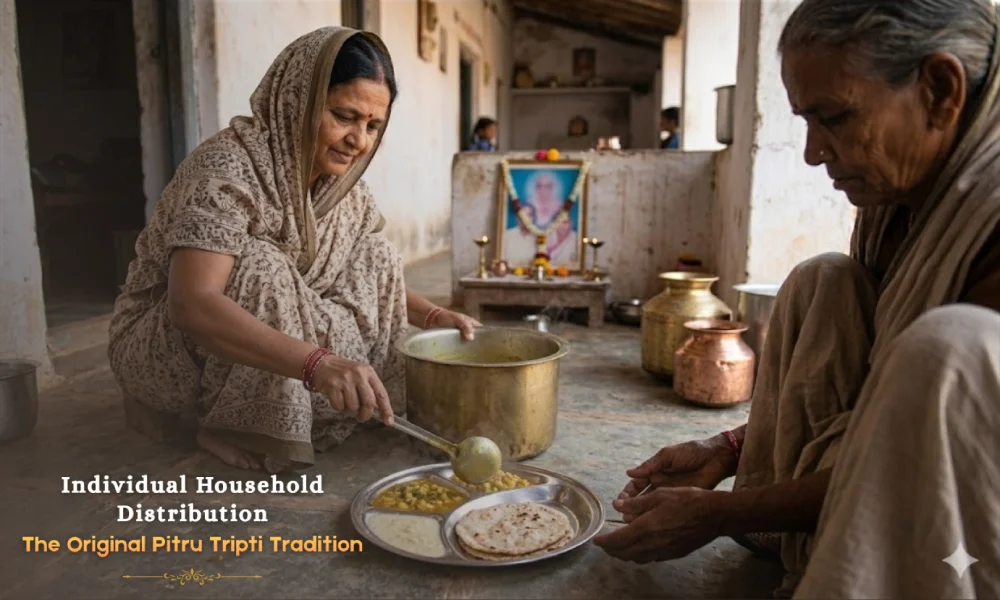
Individual Household Distribution — The Original Pitru Tripti Tradition
Before NGOs and temple trusts, Pitru Tripti began at home. See how 2–4 crore Indian households still practice Brahmin bhojan and Shradh-linked anna daan today.
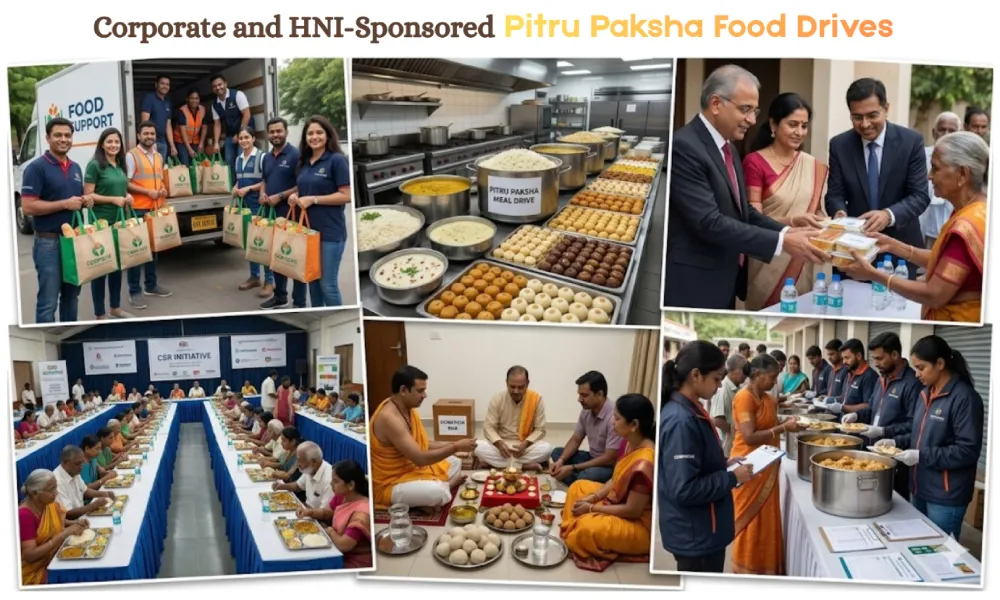
Corporate and HNI-Sponsored Pitru Paksha Drives — CSR Meets Ancestral Tradition
Explore how Indian corporates and high-net-worth donors fund Pitru Paksha feeding drives, from Infosys Foundation to Sudha Murty’s ₹10 crore Akshaya Patra donation.
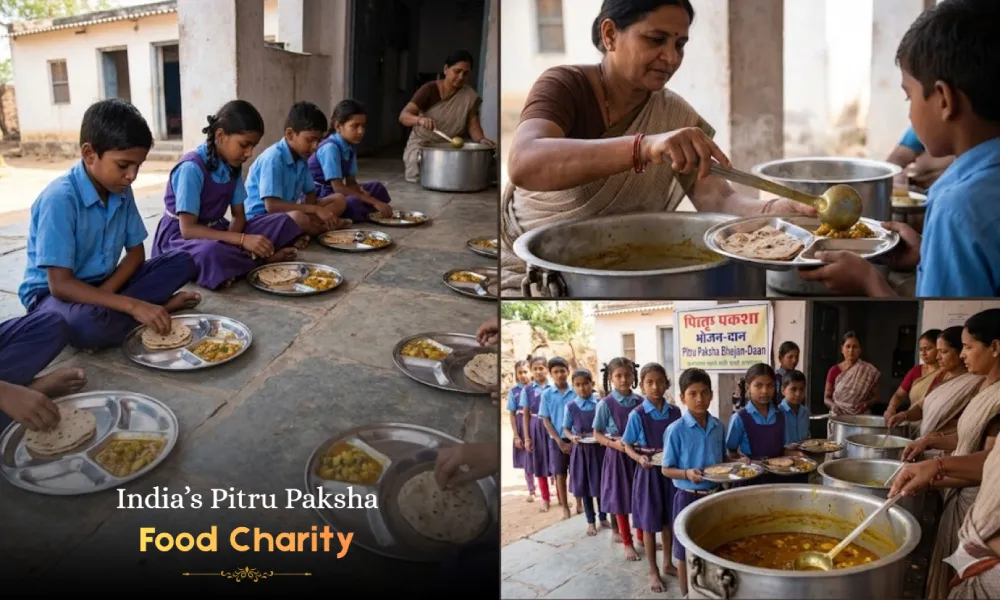
How NGOs Like Akshaya Patra and Annamrita Scale Pitru Paksha Food Charity
From Akshaya Patra’s 2.33 crore daily meals to Annamrita’s 20-kitchen network, see how India’s NGOs run structured Shradh and Pitru Paksha feeding campaigns.